
Bahrain’s authorities are facing mounting criticism over an unprecedented effort to criminalize a religious tradition rooted in more than fourteen centuries of Islamic practice.
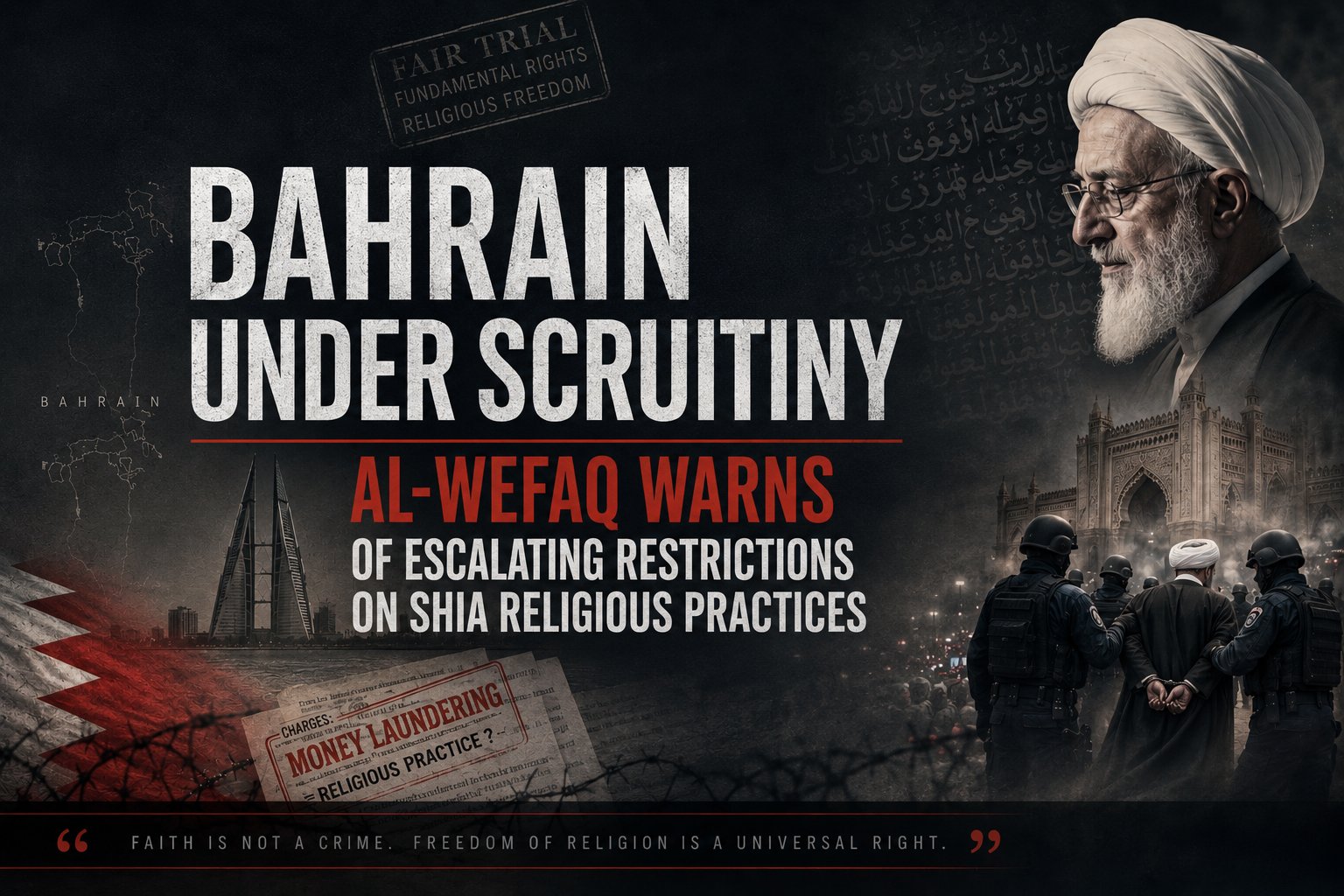
The controversy centers on allegations linked to the collection of religious dues, whereby the charges effectively target the entire Ja‘fari school of thought and reflect a broader pattern of sectarian discrimination directed at Bahrain’s longstanding Shia community.
According to
ALWEFAQ
recent statement, the criminalization of a central religious obligation — amid claims that additional aspects of Shia religious life may also come under scrutiny — represents a form of collective punishment based on sectarian identity.
The measures are part of a wider process of political exclusion, social marginalization, and the systematic weakening of Shia representation within state institutions.
Particular concern was expressed over the detention of senior clerics, preachers, and religious representatives across Bahrain, including figures associated with Ayatollah Sayyed Ali al-Sistani.
The statement characterizes these arrests as an unprecedented move aimed at restricting religious practice and targeting individuals solely for carrying out religious and social responsibilities.
The developments further reflect a coordinated state approach involving political, legal, executive, and judicial mechanisms, accompanied by media narratives allegedly designed to justify the campaign through incitement and misinformation.
Al Wefaq warns that the current escalation represents one of the most severe episodes of sectarian polarization in Bahrain’s recent history, raising concerns that Shia citizens may increasingly face intimidation over the practice of their religious rituals and communal traditions.
It further adds that continued governance through sectarian policies, exclusion, and coercive methods risks deepening societal divisions and undermining social cohesion.
The statement calls for greater international attention and engagement from legal, humanitarian, and human rights institutions, asserting that the situation carries broader moral and legal implications.
Concluding its remarks, Al Wefaq reiterates that Bahrain’s long-term stability depends on the establishment of a democratic political framework grounded in civil liberties, political participation, pluralism, and equal representation.
The society states that only an inclusive system can safeguard diversity and prevent the recurrence of political and social crises.